OUR SERVICES
Pruning
Our team of skilled arborists is dedicated to enhancing the health and vitality of your trees. From tree pruning to tree growth regulator application, we provide expert care to ensure your trees thrive. We provide advice and cutting services through our skilled partners and years of experience.
Plant Growth Regulator
WARNING: Improperly applied growth regulators will kill your plants! Have a professional apply these treatments!
Plant Growth Regulators alter plant growth hormones. Plant energy is focused into fine root growth rather than crown growth; this increases the plant's drought and pest resistance. Plant morphology changes include slow growing hard woody tissue, small deep green leaves with thicker cuticles, and dramatic increase in fine root growth. A fascinating overview regarding the benefits of growth regulators is linked here:
https://www.youtube.com/watch?v=fnPfDgFdk_s
Plant growth regulators often saves money with fewer pruning and lawn mowing services needed. Plants also become much more efficient with water uptake which potentially reduces irrigation requirements.


Girding Roots
Girdling roots frequently occur due to nursery practices, transplanting methods, soil barriers, and occasionally unidentified causes. These roots are located at or just beneath the soil level and either cut into or encircle the trunk. Girdling roots inhibit a tree's capacity to effectively obtain water and nutrients.
Trees that leaf out late, possess small chlorotic leaves or needles, shed their leaves early, or exhibit dying back should be examined for a girdling root, particularly if the root flare of the tree is not apparent. A trunk dent or stem flattening is another common indicator.
Many tree species may display girdling roots. Certain species, such as sugar maple, Norway spruce, and white pine, are especially vulnerable to this problem.
Girdling roots must be taken out in a way that reduces harm to the trunk. This usually starts with digging into the soil to reveal the scope of the issue. The girdling roots are subsequently trimmed off precisely.
Tree Planting Practices
1. The trunk flare is the area where the trunk widens at the bottom of the tree. Make sure the trunk flare is somewhat exposed after planting the tree. Eliminate excess soil before planting if the flare isn’t visible.
2. Excavate a wide, shallow planting cavity. Holes must be 2–3 times broader than the root ball, but should not exceed the depth of the root ball.
3. If encased, take off any covering surrounding the root ball and trunk to support root development. Take off the wire basket or cut one or two rings to make it low-profile, ensuring it won't hinder future root development. Examine the tree root ball for encircling roots and straighten, trim, or eliminate them. Reveal the flare of the trunk if needed.
4. While positioning the tree in the hole, elevate by the root ball instead of the trunk. Planting excessively deep can damage the tree.
5. Before filling the hole, have an individual inspect the tree from various viewpoints to ensure it is upright.
6. Carefully yet assertively pack the hole. Surround the base of the root ball with soil to secure it.
Minimize air gaps by regularly watering during the backfilling process. Refrain from fertilizing during the planting phase.
7. Research indicates that trees grow sturdier trunks and roots when they aren’t staked; nonetheless, staking might be necessary for bare root stock or in windy locations. Take out stakes following the initial year of growth.
8. Apply a 2–3 inch layer of mulch, but avoid stacking it directly against the trunk. An area without mulch that's 1–2 inches wide at the tree's base will decrease damp bark and stop decay.
9. Water the soil at least weekly, except when it rains, and increase frequency in hot, windy conditions to maintain moisture


Mulch Rings
How To Correctly Use Mulch
When applying mulch around trees, the method is equally important as the substance used:
Spread the mulch to the tree’s drip line (the outer perimeter of the tree’s limbs) or further.
Maintain mulch at a distance of 4-6 inches from the trunk to avoid moisture accumulation and rot. This spacing also reduces the odds of development of deadly girdling roots.
Keep a layer of mulch that is 2–4 inches deep for optimal moisture retention and temperature control.
Utilize natural mulch items like wood chips or shredded bark
Buckthorn Removal
What makes invasive Buckthorn problematic?
1 Creates a thick layer that surpasses our indigenous plants.
2 Withstands indigenous pests and illnesses
3 Leaves persist in photosynthesis deeper into the autumn compared to native plants.
4 Produces multiple shoots from the stump after being cut down.
What is the purpose of using herbicides?
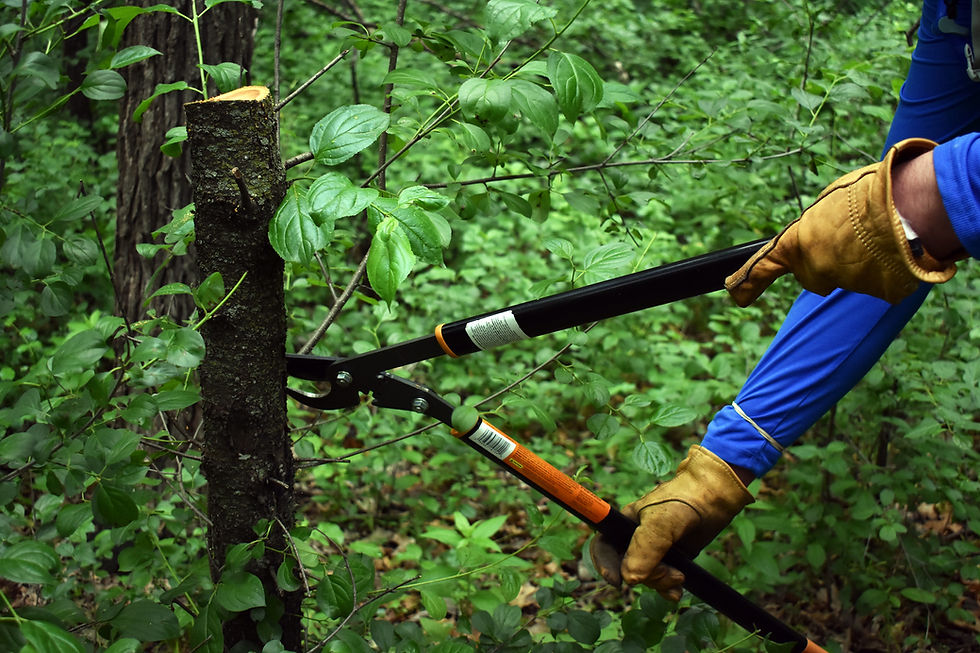
Simply cutting down Buckthorn exacerbates the issue. The root network remains active and signals the stump to produce new shoots. The new shoots develop rapidly (4 to 5 feet within a year) and begin to densely occupy the space more than previously. This may cause attempting to reduce it again to be significantly more effort than initially. Herbicide significantly declines the level of regrowth. It enables us to maintain the Buckthorn at a controllable size and population in the future without the need for annual removal.

When are herbicides used?
The stumps need to be addressed soon after the Buckthorn has been removed. You can spray the leaves at any time throughout the growing season. A fall inspection and spray is an effective method to identify and target the Buckthorn as they retain their leaves for an extended period. The most effective way to manage young seedlings that will emerge for years is to spray the area 1-2 times a year.Therapeutic Alternatives:1 Trim and eliminate all Buckthorn that exceeds waist height.2 Apply concentrated herbicide to stumps3 Spray the leaves of every last Buckthorn4 Come back in the autumn for a second application.5 Come back next summer and autumn for additional treatments.1 Use a bark-absorbing herbicide blend on the tree trunks.2 Apply spray to all smaller Buckthorn leaves3 Either take out dead Buckthorn or let it remain upright.4 Come back in the autumn for a second application.5 Come back next summer and autumn for follow-up therapies.